Ancient writing systems facilitated record-keeping and societal organization.
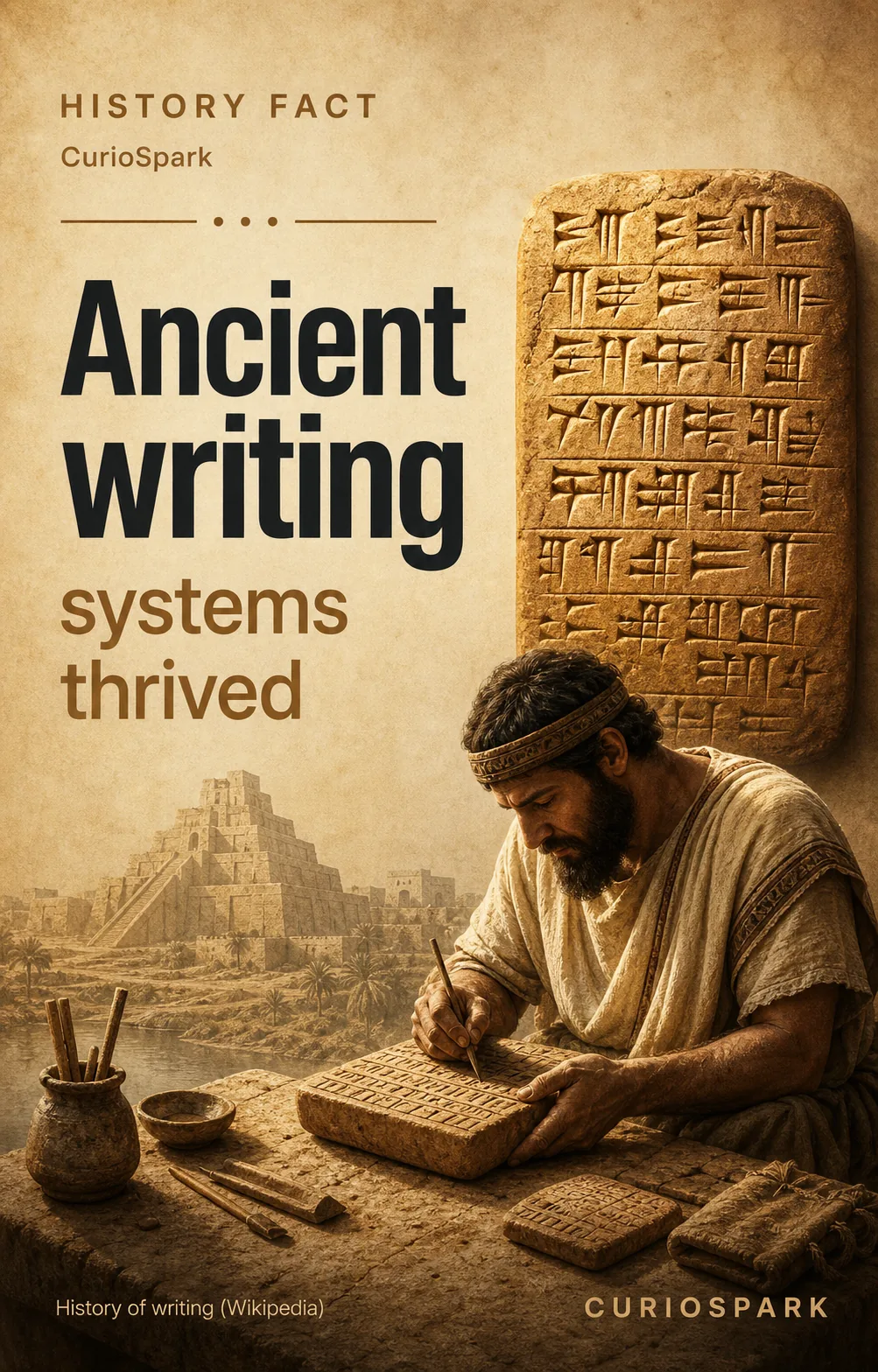
Ancient writing systems facilitated record-keeping and societal organization.
- Cuneiform and hieroglyphics emerged around 3200 BCE for record-keeping and enhancing social cohesion in ancient civilizations.
The birth of ancient writing systems marks a pivotal moment in human history, rooted in practical needs like record-keeping and social cohesion. Around 3200 BCE, cuneiform emerged in Mesopotamia, transforming simple clay tokens into complex symbols etched onto tablets. This system evolved primarily to document transactions, manage inventories, and maintain land records as Mesopotamian societies grew and economies became more sophisticated. Similarly, Egyptian hieroglyphics, dating from approximately 3100 BCE, served multiple functions—logging religious rituals, narrating myths, and immortalizing the deeds of pharaohs in stone. The advent of these writing systems significantly coincided with the rise of ancient civilizations, aiding in organizing vast populations and supporting the development of complex social structures. Writing enabled these cultures to transcend oral tradition, ensuring the continuity of cultural narratives across generations. The sophistication of these systems extended beyond political or economic objectives, seeping into cultural realms, where symbols and signs conveyed beliefs and customs, often closely linked to religion. As a tool for both governance and cultural expression, these early writing systems laid the groundwork for future advancements in communication and learning, which continue to shape civilizations today.


Comments
Post a Comment