Anglerfish use an esca as a glowing lure to catch prey in ocean depths.
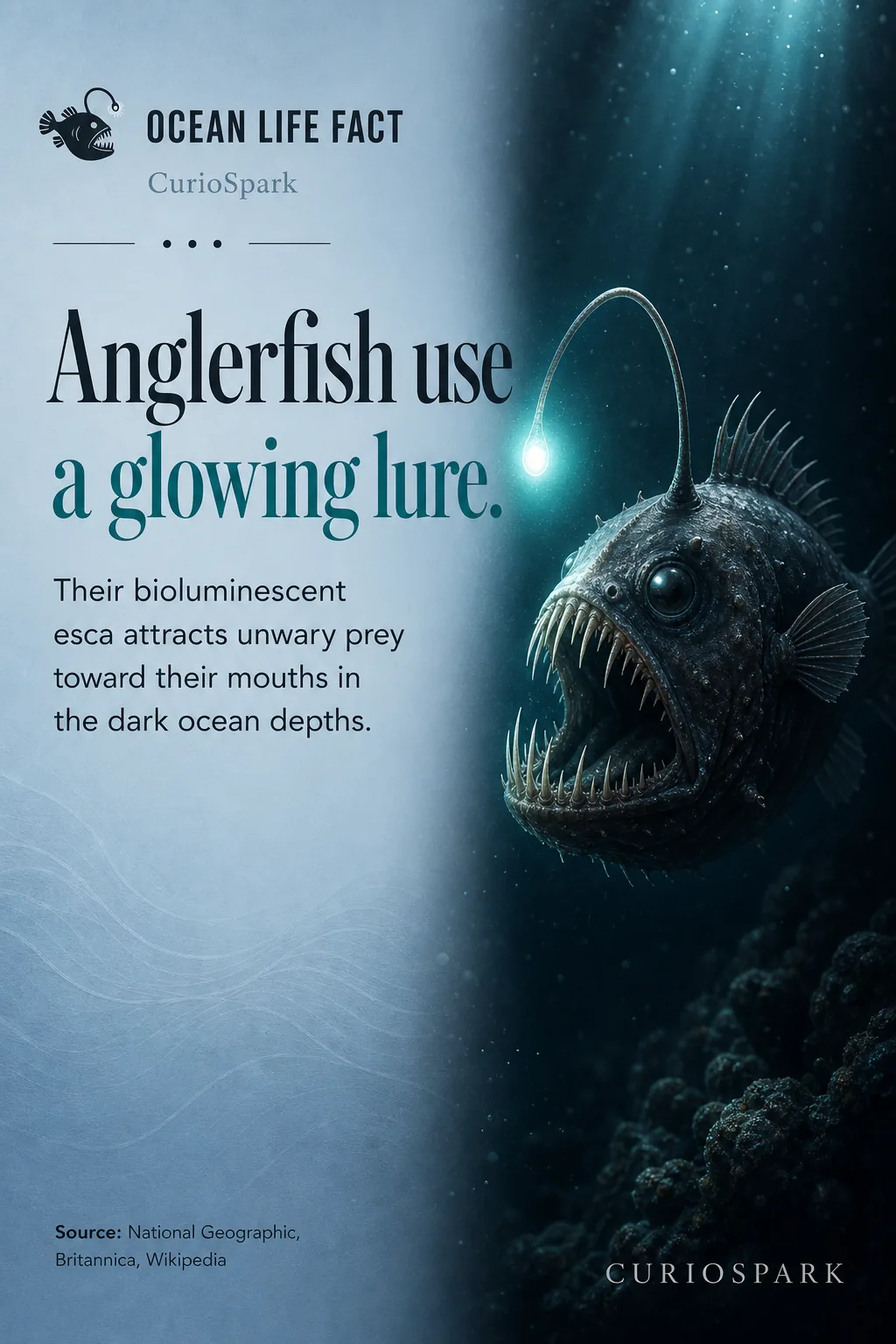
Anglerfish use an esca as a glowing lure to catch prey in ocean depths.
- Their bioluminescent esca attracts unwary prey toward their mouths in the dark ocean depths.
Anglerfish are remarkable creatures residing in the shadowy realms of the deep ocean, and their hunting method is a testament to nature's ingenuity. At the core of their predatory technique is a bioluminescent lure known as the esca. Protruding from their heads, this specialized appendage mimics prey, beckoning unsuspecting marine life towards their gaping mouths. The source of its glow is bioluminescent bacteria living symbiotically in the esca, producing light through biochemical processes. This glowing beacon captivates the curiosity of small fish and other potential prey, drawing them in unsuspectingly. In the inky blackness where the sun's rays barely penetrate, the anglerfish's lure is a deceptive promise of food, but it conceals a cunning predator's trap. This fascinating adaptation ensures the anglerfish can thrive in their cold, dark habitats, where food is often scarce. Such unique adaptations not only highlight the anglerfish's role in the ocean's complex food web but also underscore the wonders of evolutionary biology. Each flicker of the esca illuminates the myriad ways life adapts and thrives in extreme environments, making the anglerfish a true marvel of the marine world.


Comments
Post a Comment