On Neptune and Uranus, diamond-like rain may fall due to immense pressures.
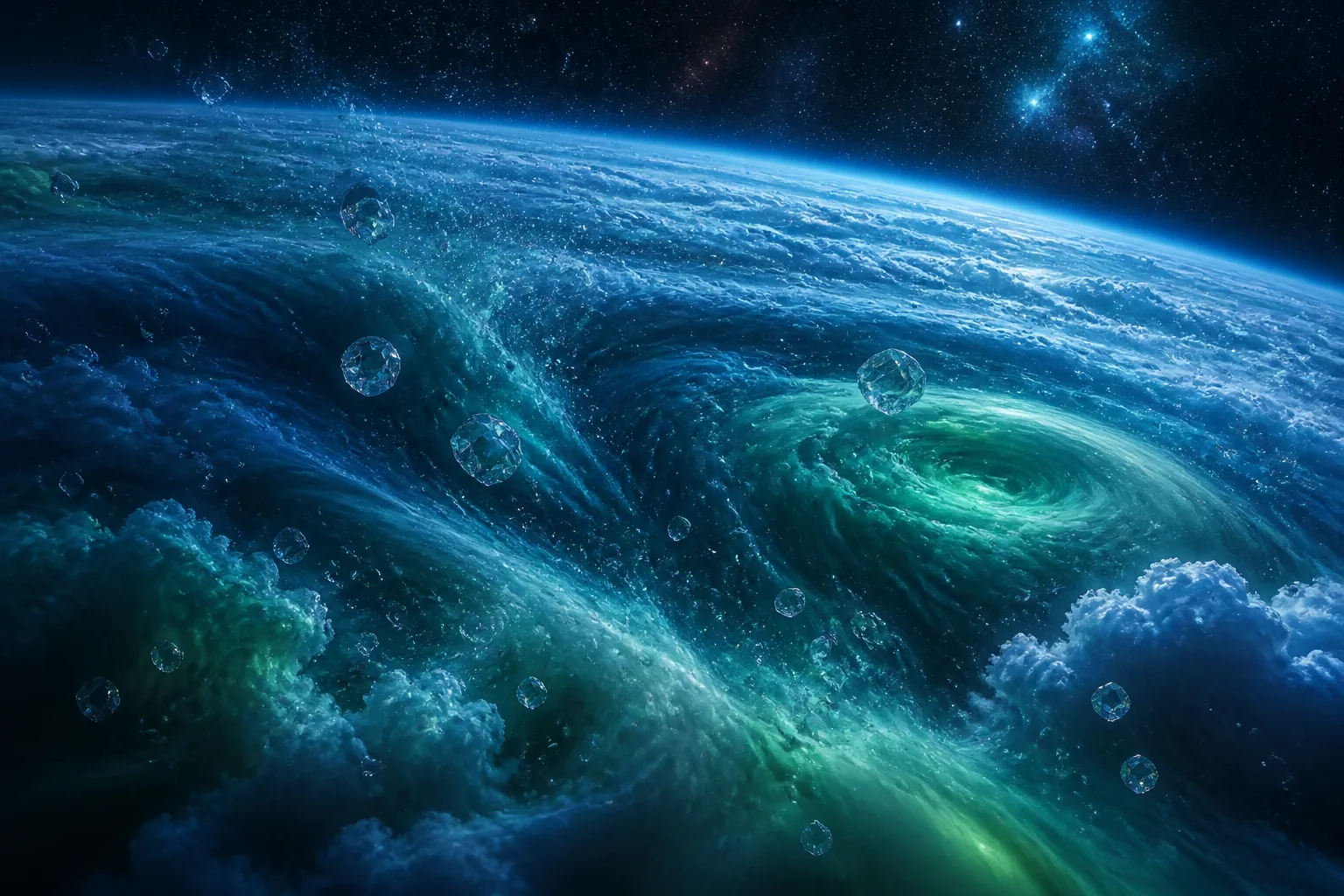
Neptune and Uranus, often referred to as ice giants, harbor a mysterious phenomenon under their gaseous atmospheres: diamond rain. These planets contain extensive atmospheres where carbon is abundant. Deep within their atmospheres, immense pressures and high temperatures can potentially compress this carbon directly into diamond crystals. As the pressure crushes the carbon atoms together, they form diamond structures, a process akin to making synthetic diamonds on Earth but on a massive, natural scale. These diamonds, possibly ranging from small particles to larger stones, may drift slowly towards the planets' inner layers. This spectacular phenomenon, though challenging to observe directly, is supported by experimental recreations on Earth and theoretical models. Such studies hint that diamond rain could play a key role in these planets' energy dynamics, possibly affecting heat distribution and contributing to their magnetic fields. While humans might never witness this extraordinary event firsthand, the research opens up fascinating possibilities about the exotic weather conditions on these distant worlds.


Comments
Post a Comment