Owls' unique feathers enable silent, stealthy flights.
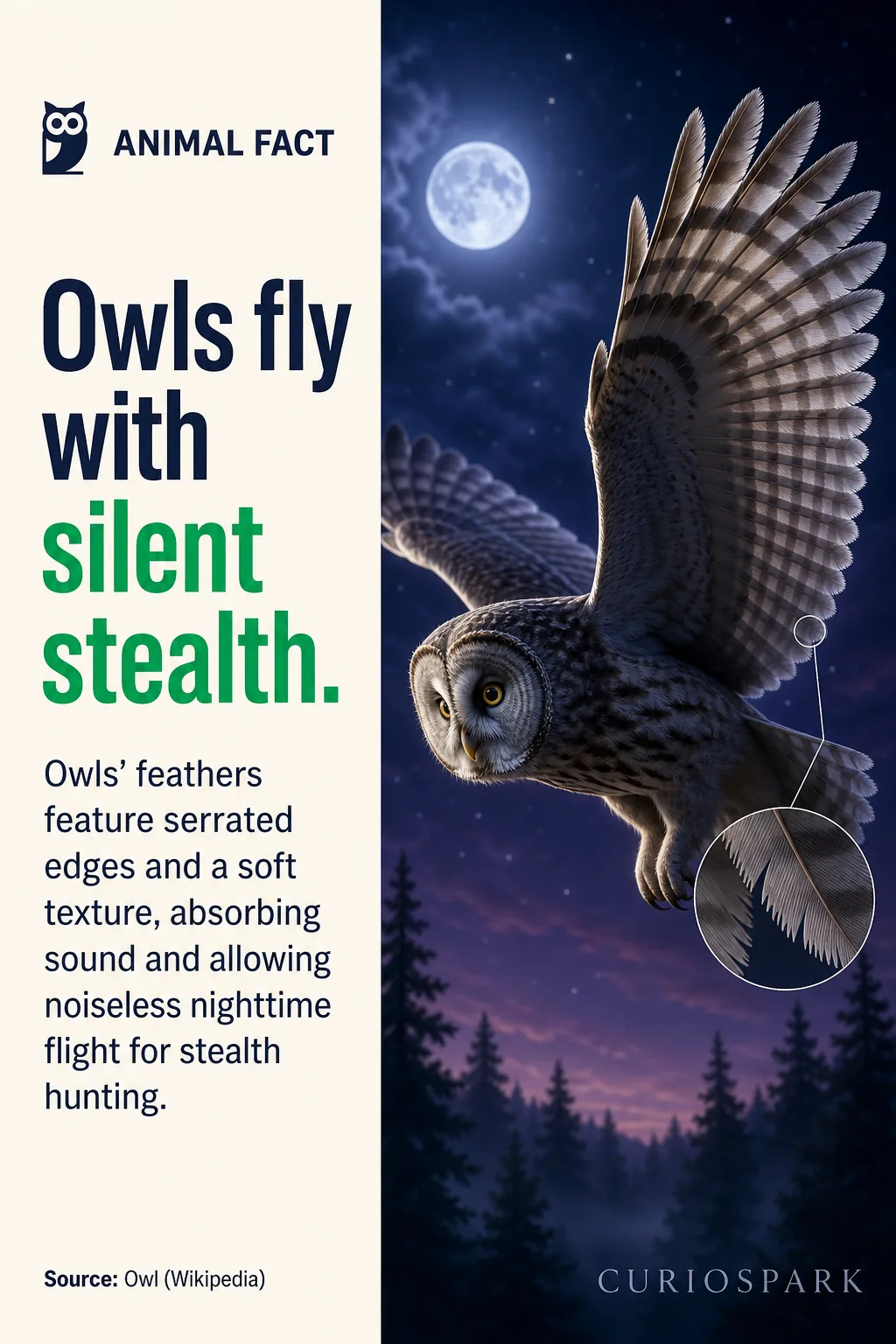
Owls' unique feathers enable silent, stealthy flights.
- Owls' feathers feature serrated edges and a soft texture, absorbing sound and allowing noiseless nighttime flight for stealth hunting.
Owls, mysterious night-time hunters, have a remarkable ability to fly silently, giving them an advantage in hunting unsuspecting prey. This near-silent flight is primarily enabled by the specialized structure of their feathers. Firstly, the leading edge of an owl’s flight feathers features serrated edges. These serrations help to disrupt airflow, converting sound energy into a frequency that their prey cannot easily detect. Moreover, the surface of their feathers is coated with a soft, velvety texture that plays a crucial role in sound absorption. This texture dampens various sound frequencies, which are often generated during flight, ensuring the owl remains quiet even in motion. Additionally, owls are equipped with primary feathers that end in a soft fringe. This fringe significantly reduces noise by breaking up turbulence as air passes over the wings, further enhancing the stealth of their flight. Together, these adaptations allow owls to soar quietly through the night, catching their prey by surprise and making them effective predators. Their specialized flight mechanics showcase the marvels of nature's adaptation, allowing these birds of prey to master the art of silent flight.


Comments
Post a Comment