Prairie dogs use complex alarm calls to describe predator type, size, and speed.
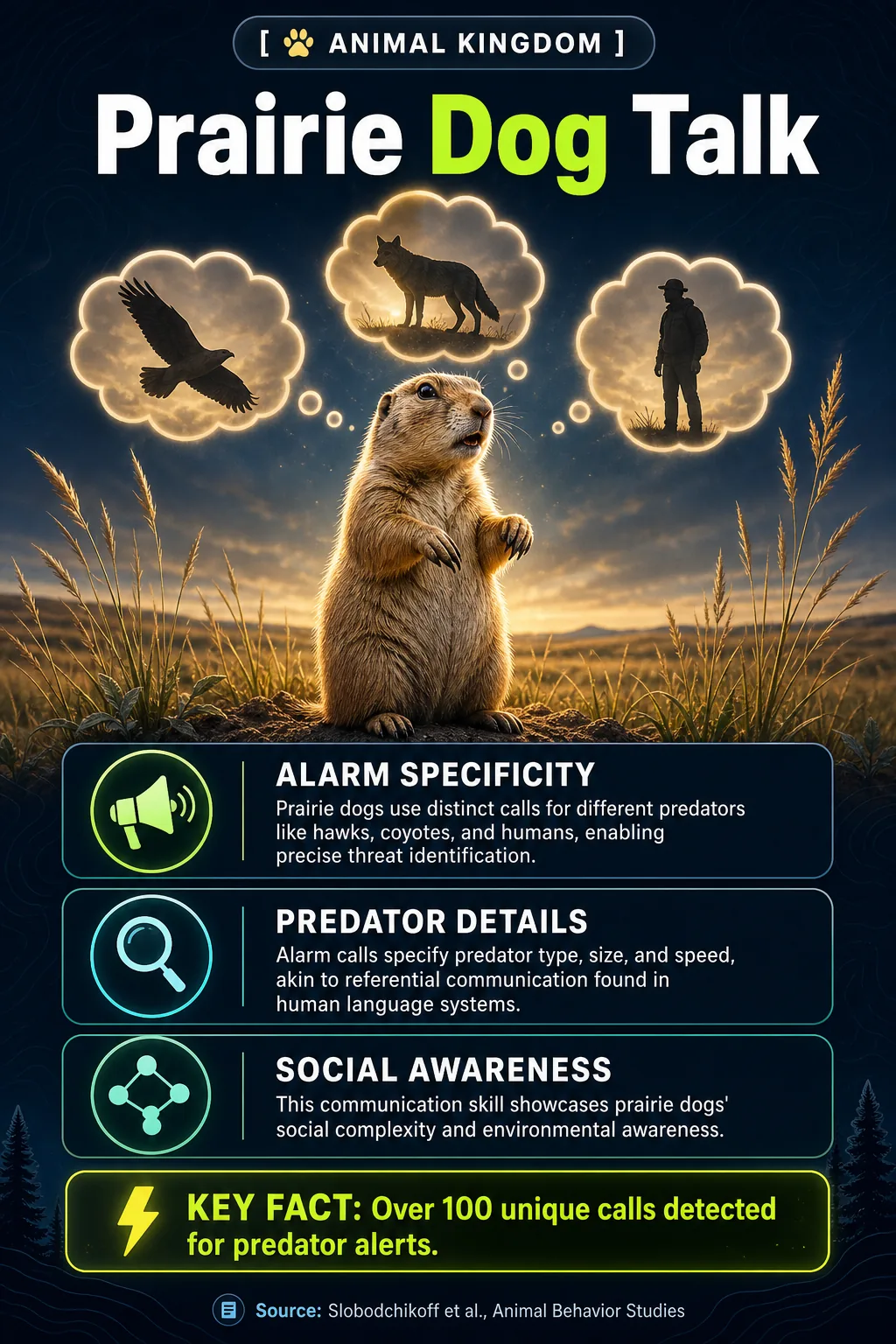
Prairie dogs use complex alarm calls to describe predator type, size, and speed.
- ALARM SPECIFICITY: Prairie dogs use distinct calls for different predators like hawks, coyotes, and humans, enabling precise threat identification.
- PREDATOR DETAILS: Alarm calls specify predator type, size, and speed, akin to referential communication found in human language systems.
- SOCIAL AWARENESS: This communication skill showcases prairie dogs' social complexity and environmental awareness.
Prairie dogs, often seen as mere burrowers on the American plains, possess a surprisingly intricate language system. They have developed a sophisticated way of communicating detailed information about predators through alarm calls. Remarkably, these calls are not generic; they are specific to different predators, allowing a prairie dog colony to prepare adequately for the exact threat they face. For instance, the presence of a hawk, coyote, or human each triggers a distinct call. Research led by animal behaviorist Con Slobodchikoff has uncovered that these calls go beyond simple alerts. They describe an intricate array of predator attributes, including type, size, and speed. This detailed form of communication is akin to what is known as 'referential communication,' where signals refer to specific objects or events in the environment—similar to how humans describe different things through language. The fact that prairie dogs can convey such specific details about threats not only highlights their understanding of their surroundings but also reflects the dynamic and surprisingly intricate nature of animal communication within this highly social species.


Comments
Post a Comment