Shimmering Seas: Bioluminescence lights up the ocean depths.
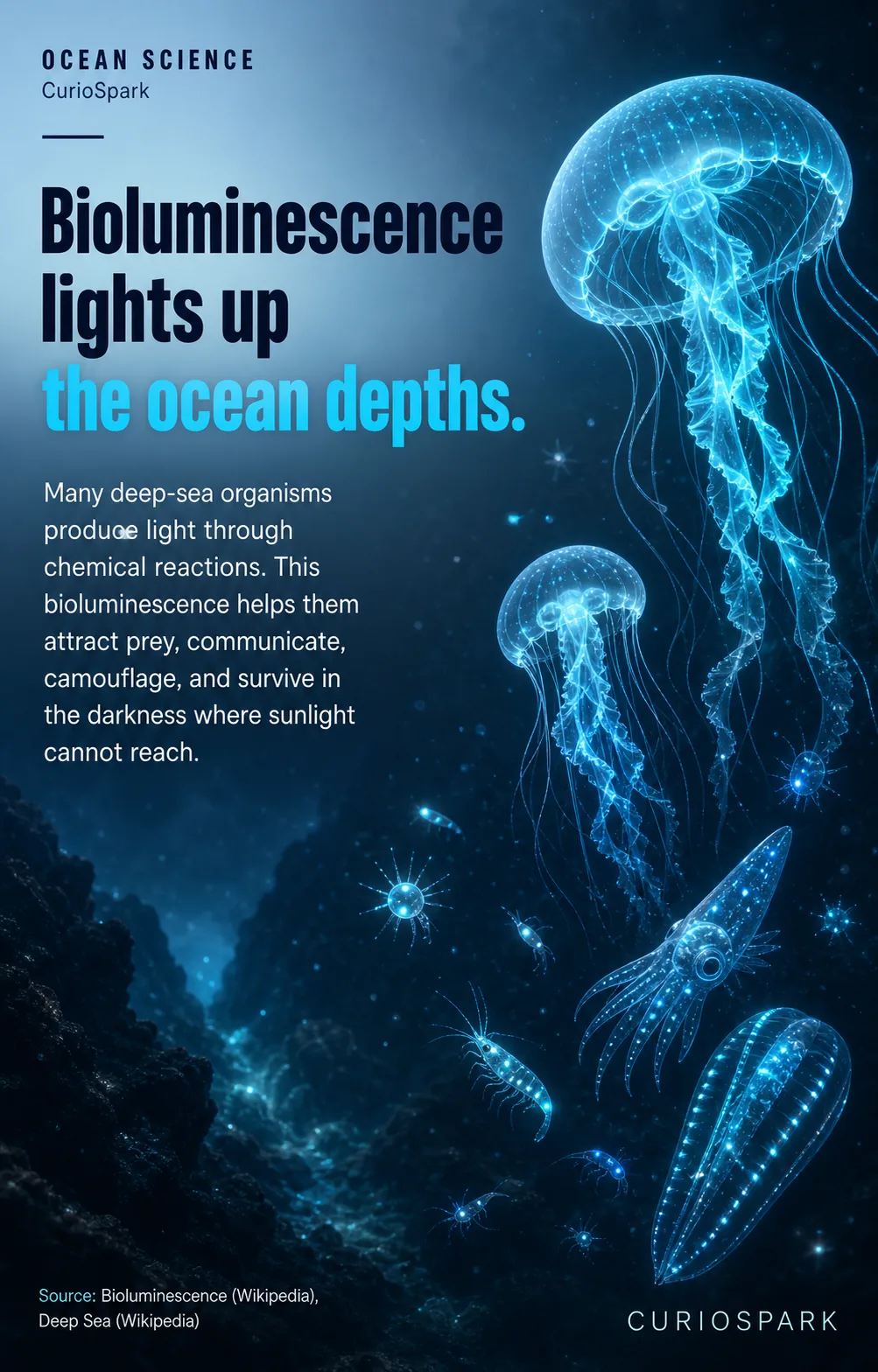
Shimmering Seas: Bioluminescence lights up the ocean depths.
- Bioluminescence is a natural phenomenon where organisms emit light via luciferin and luciferase reactions, aiding communication and predation.
Bioluminescence is a captivating natural phenomenon where living organisms emit light through a chemical reaction. This reaction, known as chemiluminescence, occurs when luciferin—a light-emitting compound—reacts with oxygen in the presence of the enzyme luciferase. This process results in the beautiful glow observed in various organisms. This light-producing ability is not limited to a small group of creatures. It is remarkably widespread and can be seen in diverse kinds of marine species, including jellyfish, certain types of fish, and even some squid and shrimp. Terrestrial fungi like the "Foxfire" mushroom also display this enchanting luminescence. One of the most intriguing adaptations of bioluminescence is seen in deep-sea organisms. These creatures have honed this skill to thrive in the expansive, pitch-black environments of the ocean's depths. The glowing light is often used for communication, luring prey, or evading predators by creating dazzling displays. Bioluminescence, a marvel of nature, serves multiple purposes, from survival strategies to captivating displays, revealing the adaptive ingenuity of life on Earth. Whether in the deep sea or damp forests, this light from the living is both a functional tool and a stunning spectacle.


Comments
Post a Comment