Trees communicate underground via a fungal network called the mycorrhizal network.
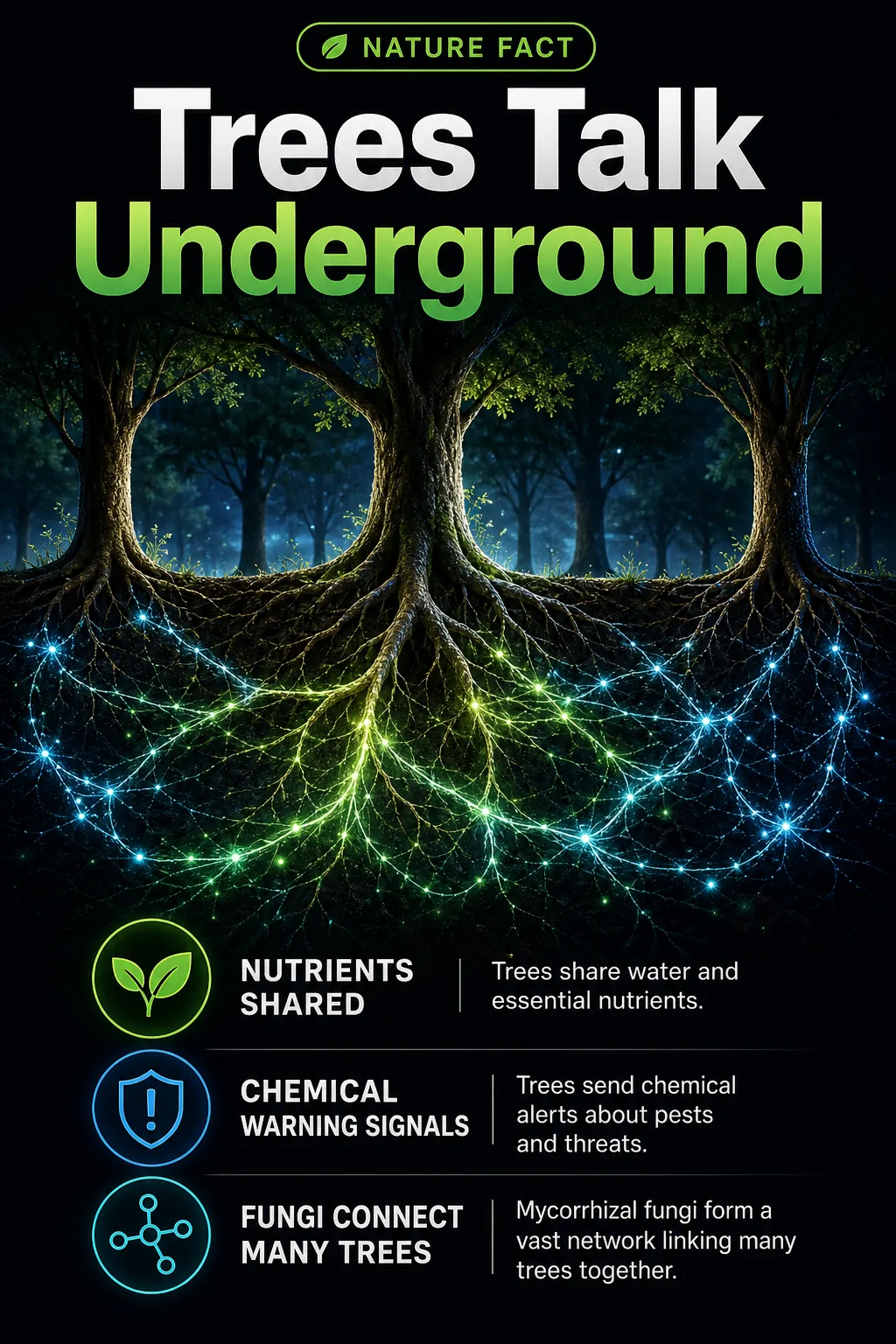
Trees communicate underground via a fungal network called the mycorrhizal network.
- Mycorrhizal networks connect trees, enabling nutrient and chemical signal exchange underground.
- Mother trees act as vital hubs, providing resources to younger trees for forest growth.
- These networks enhance forest resilience by alerting trees to threats and sharing nutrients.
Trees, often perceived as stationary and isolated, are part of a complex underground community known as the mycorrhizal network. This hidden network works through symbiotic relationships between the roots of plants and trees and fungi in the soil. Fungi form intricate webs that connect different plants, effectively allowing trees to "talk" to one another. These "conversations" involve the transfer of vital nutrients, such as carbon and nitrogen, as well as chemical signals that can alert trees to environmental threats, like insect infestations. Large, established trees, called 'mother trees,' play a central role in these networks. They act as vital hubs in the forest ecosystem, sharing nutrients and resources with younger, less mature trees, thereby supporting their growth and survival. This nurturing nature of mother trees fosters a cooperative environment, which strengthens the entire forest. Through this underground web, trees are not solitary entities but part of a thriving, interconnected community, showcasing the remarkable complexity of life beneath our feet. All this underlines the significance of forests beyond their visible beauty, emphasizing the critical importance of mycorrhizal networks in maintaining the vitality of forest ecosystems.


Comments
Post a Comment