Animals mimic others to survive by fooling predators.
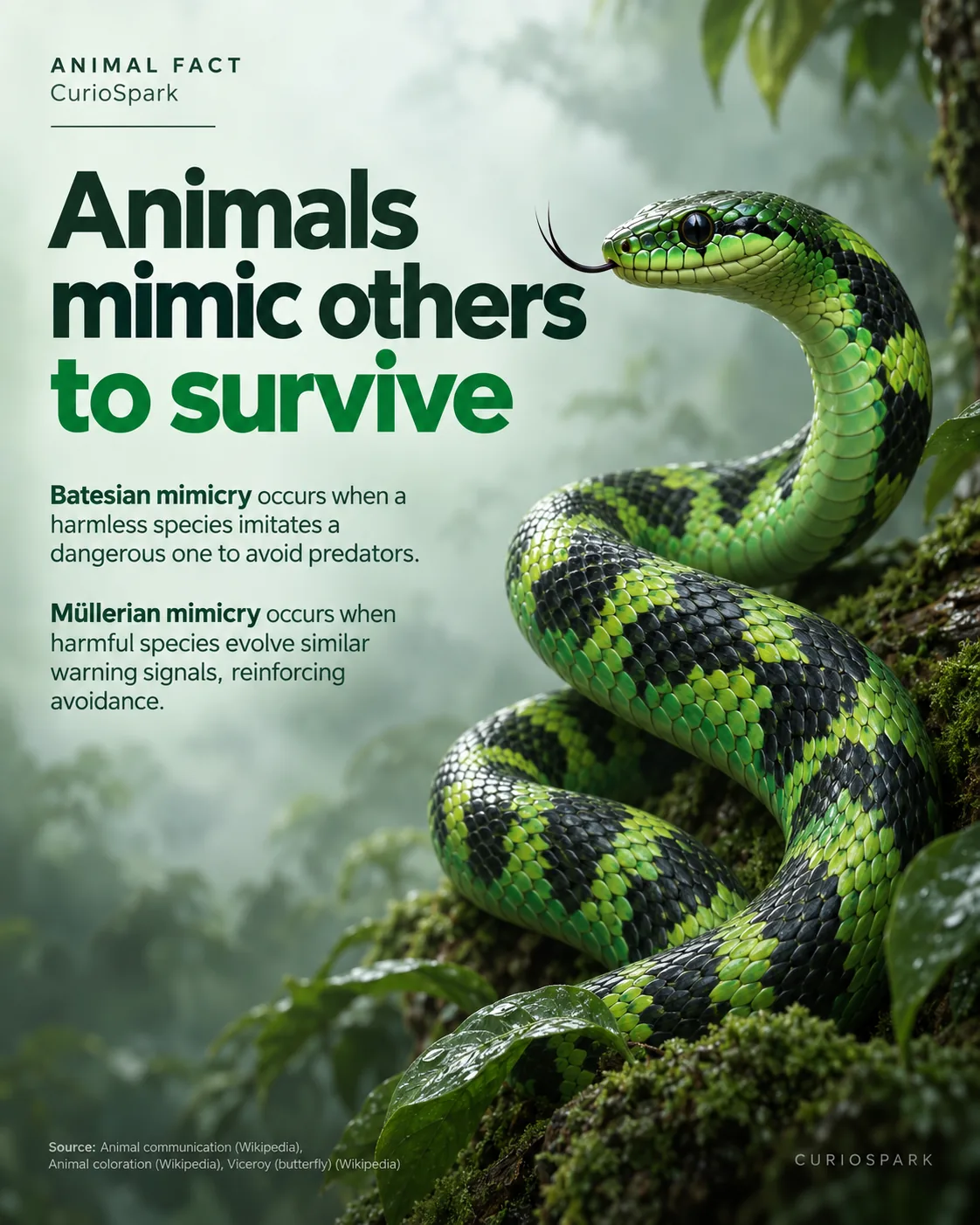
Animals mimic others to survive by fooling predators.
- Mimicry aids survival by deceiving predators. Batesian mimicry involves harmless species mimicking harmful ones, while Müllerian mimicry amplifies threats.
Animals deploy mimicry as a clever survival tactic to navigate the harsh realities of the natural world. This strategy primarily manifests as either Batesian or Müllerian mimicry. In Batesian mimicry, a harmless species gains an evolutionary advantage by imitating the warning signals of a harmful species. For instance, certain non-venomous snakes mimic the coloration of their venomous relatives to discourage predators from considering them as potential prey. Predators, often unable to distinguish between the genuine threat and the mimic, are more likely to refrain from attacking, enhancing the mimic’s chances of survival. Conversely, Müllerian mimicry occurs when two or more harmful species evolve to resemble each other, a mutually beneficial arrangement that reinforces the avoidance behavior of predators. This resemblance amplifies the "stay away" signal, making it more memorable for predators who may have tasted or been harmed by one of the species. The evolutionary development of these mimicry traits might have roots in migration and speciation events, which brought different species into similar environments where such adaptive traits could confer a survival advantage. Ultimately, the natural art of imitation guards animals against threats, ensuring their continued presence in diverse ecosystems.


Comments
Post a Comment