Bioluminescence: Nature's Brilliant Light Show in Living Organisms
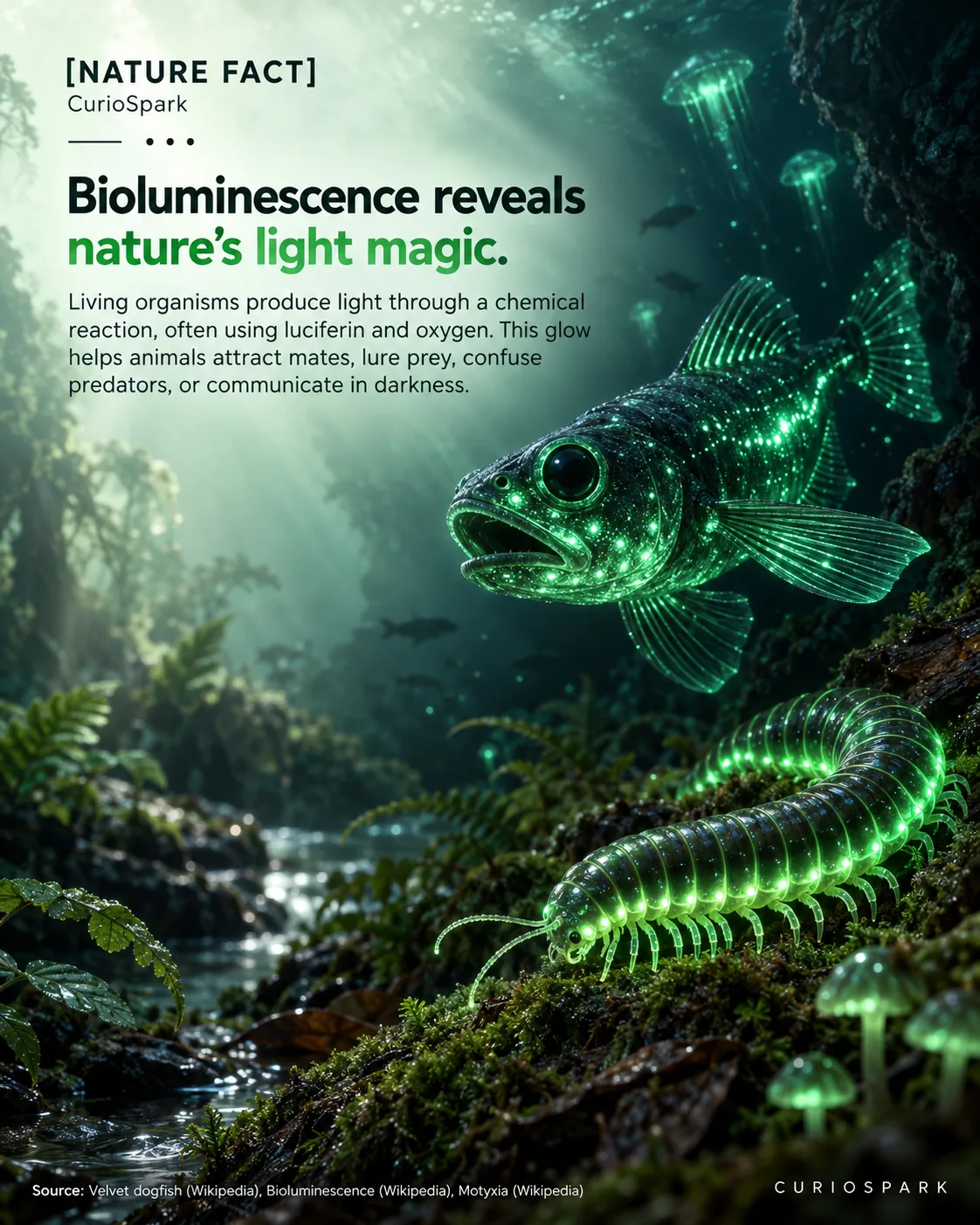
Bioluminescence: Nature's Brilliant Light Show in Living Organisms
- Certain organisms produce light through a chemical reaction of luciferin and oxygen, aiding navigation and predation.
Bioluminescence is the enchanting light produced by certain organisms. This incredible phenomenon arises from a specific chemical reaction involving luciferin molecules and oxygen. When these two elements interact, they release energy in the form of visible light. While commonly associated with the ocean's depths, where creatures like deep-sea fish use photophores—specialized light-emitting organs—to navigate the dark waters, bioluminescence isn't limited to marine life. Terrestrial creatures share this magical trait; an example is the Motyxia millipede. Found in California, it glows to ward off predators. Bioluminescence serves various purposes in nature, from attracting mates and deterring predators to luring prey. Despite its rarity on land, the occurrence of luminescent organisms highlights the vast diversity and adaptability of life on Earth. Studying these organisms not only offers insights into evolutionary biology but also inspires innovations in biotechnology and medicine. From the deep abyss to forest floors, bioluminescence continues to captivate scientists and spark the curiosity of explorers worldwide.


Comments
Post a Comment