Dolphins sleep with one eye open using unihemispheric slow-wave sleep.
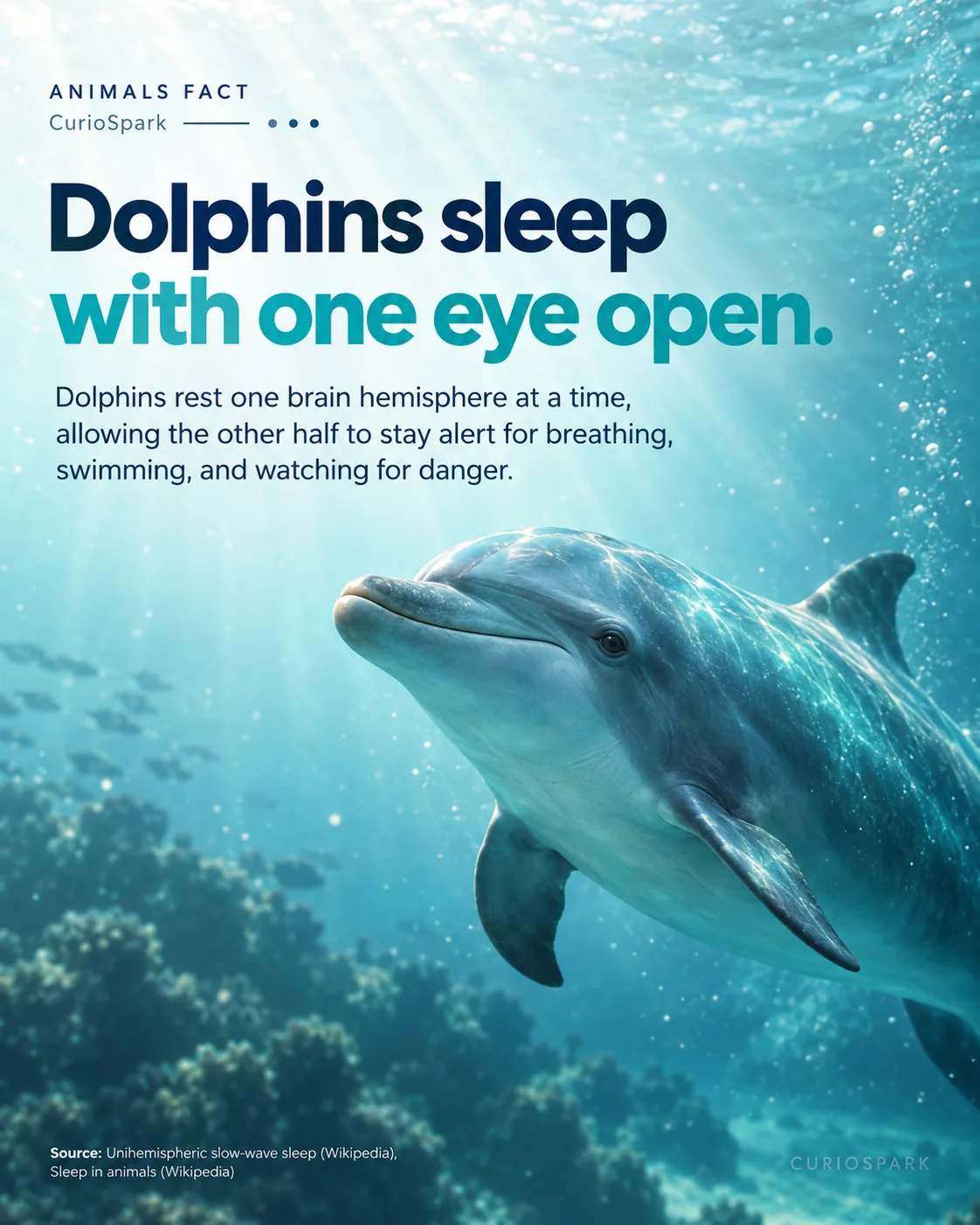
Dolphins sleep with one eye open using unihemispheric slow-wave sleep.
- Using unihemispheric slow-wave sleep, dolphins rest one brain half while remaining vigilant for threats and breathing.
Dolphins have a unique way of sleeping: they rest one half of their brain at a time in a process known as unihemispheric slow-wave sleep. This specialized adaptation allows dolphins to maintain essential functions while they rest. While one hemisphere of their brain takes a break, the other stays alert, enabling the dolphin to continue breathing and to be vigilant for potential threats. Dolphins rely on this sleep pattern to periodically surface for air, even when resting, since they are conscious breathers and cannot be completely asleep like land mammals. This remarkable ability is not unique to dolphins; other marine mammals such as porpoises also exhibit unihemispheric sleep. By keeping one eye open and a part of their brain awake, dolphins can navigate the challenges of their aquatic environment effectively, ensuring they remain alert to danger while allowing necessary rest. Such adaptations highlight the incredible evolutionary paths marine mammals have taken to survive and thrive in their ocean homes.


Comments
Post a Comment