Dolphins' vocalizations and echolocation reveal their world of sound.
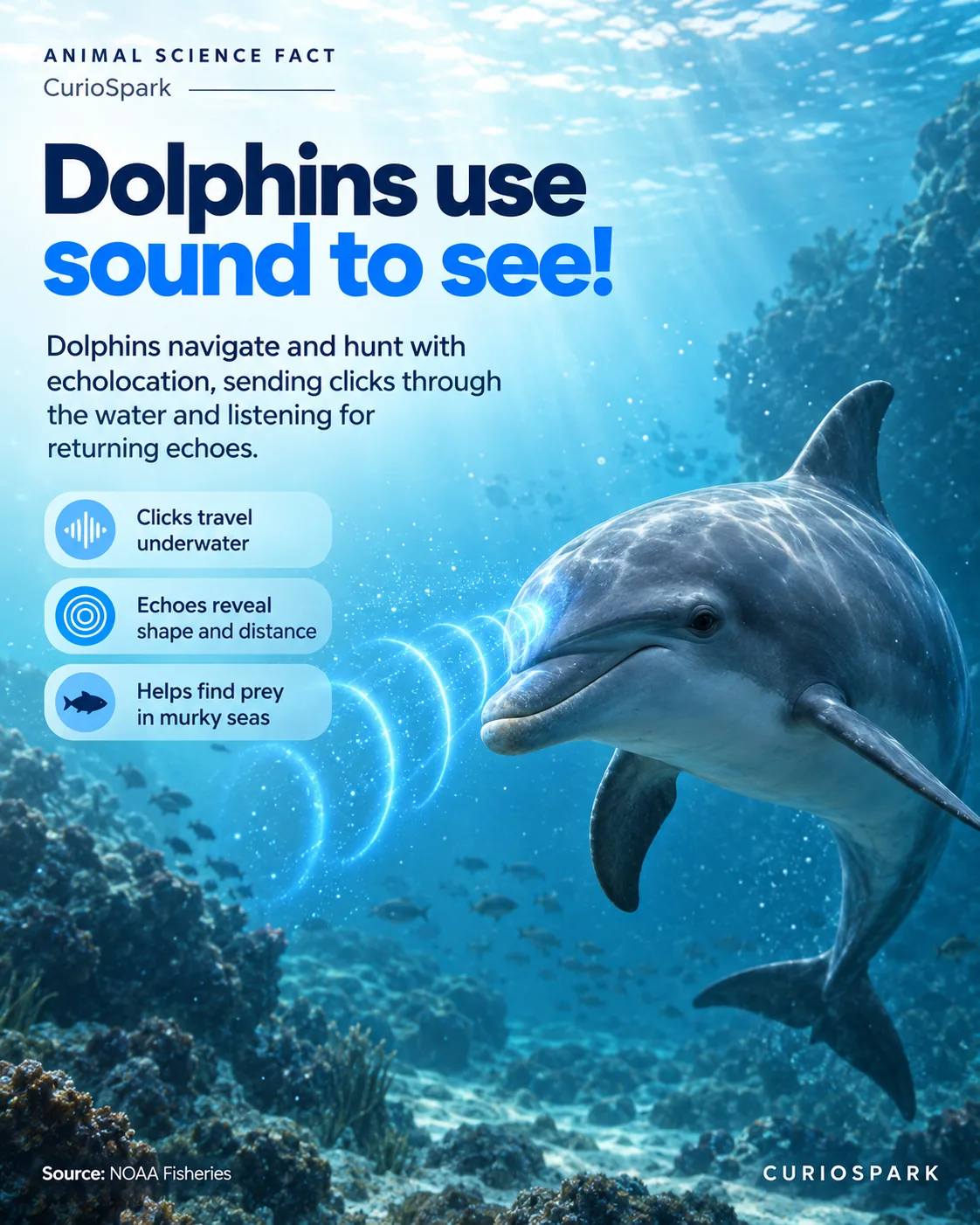
Dolphins' vocalizations and echolocation reveal their world of sound.
- Clicks and whistles help dolphins communicate.
- Echolocation 'visualizes' objects with sound.
Dolphins, often heralded as one of the most intelligent marine species, utilize a sophisticated system of sounds for communication and navigation.
Clicks and Whistles: The Language of Dolphins
Dolphins have an extensive repertoire of sounds they use, including clicks, whistles, and pulse-like calls. Each sound can signify different messages, such as signaling for help, locating family, or indicating a threat. Whistles are commonly linked with social interactions, while clicks are integral to navigation.
Echolocation: Seeing with Sound
Echolocation is a remarkable ability where dolphins emit high-frequency clicks that bounce off surrounding objects and return as echoes. By interpreting these echoes, dolphins can determine the size, shape, and even the speed of objects around them, making it an invaluable tool for hunting and navigating the dark marine depths.
- Dolphins use an array of clicks and whistles for effective communication within their pods.
- Echolocation enables dolphins to 'hear' their environment, enhancing underwater navigation.
Understanding dolphin communication opens doors to appreciating the complexities of marine life and underscores the intricate webs of interaction present in aquatic ecosystems.


Comments
Post a Comment