Greater Honeyguides lead humans to bee nests for mutual benefit.
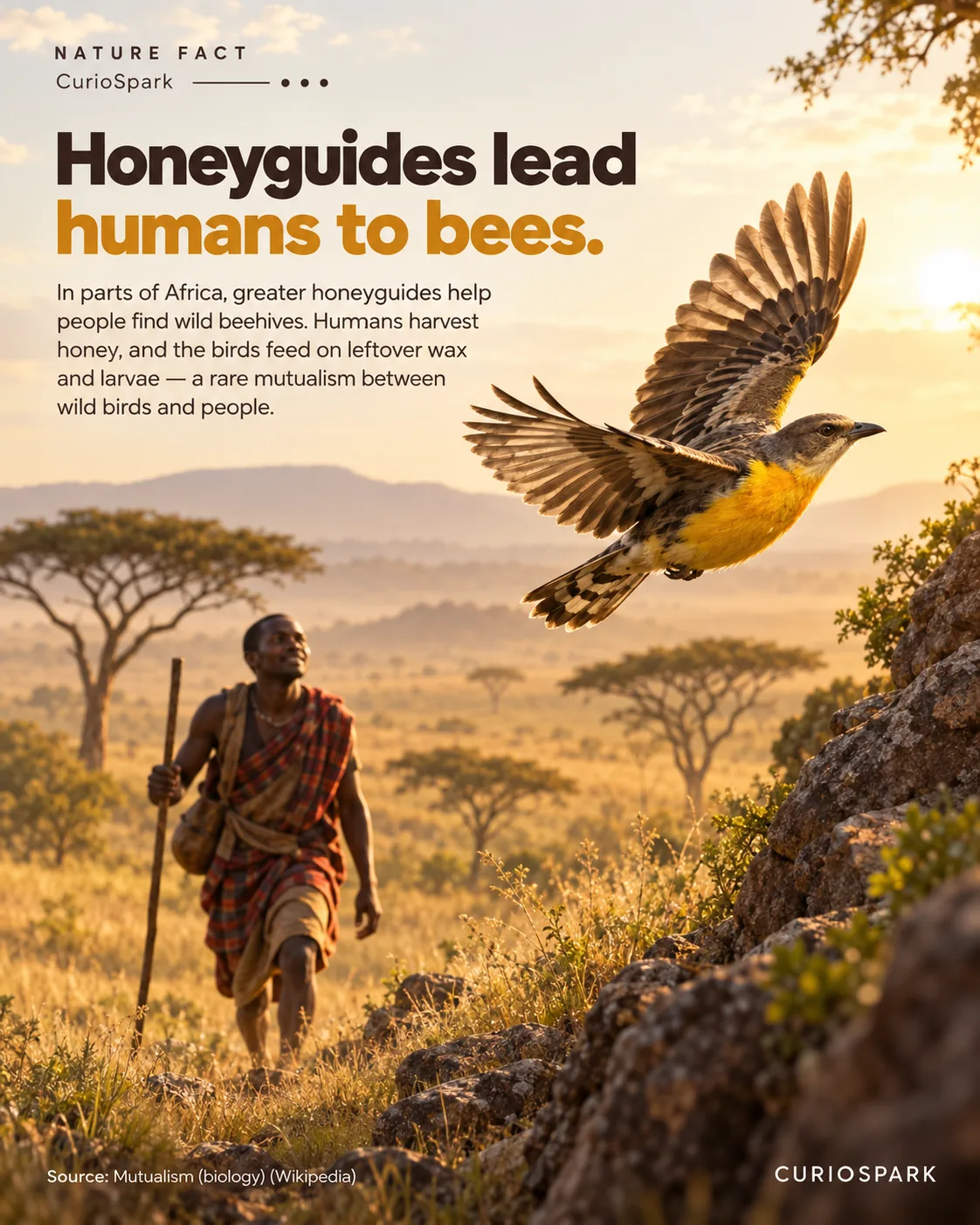
Greater Honeyguides lead humans to bee nests for mutual benefit.
- In parts of Africa, Greater Honeyguides guide humans to bee nests, benefiting both by sharing rewards.
In parts of Africa, an extraordinary partnership exists between humans and a bird species known as the Greater Honeyguide. This symbiotic relationship showcases an intricate example of mutualism in the natural world. The bird actively guides human hunters, often in rural communities, to the nests of wild bees using a series of vocal calls and flight maneuvers. Once humans locate and harvest the honey from the nests, the Honeyguide feasts on the leftover beeswax and bee larvae—resources that are otherwise difficult for it to access alone. This age-old collaboration has become embedded in the cultural practices of certain communities, highlighting a unique interspecies cooperation. Such interactions not only emanate from necessity for sustenance but also demonstrate the intricate connections that can form between different species sharing an ecosystem. Thus, this enduring bond reinforces the notion that mutual benefits can arise when humans and wildlife coexist, representing a beautiful balance with nature.


Comments
Post a Comment