Monarch butterflies travel 3,000 miles on a multigenerational journey to Mexico.
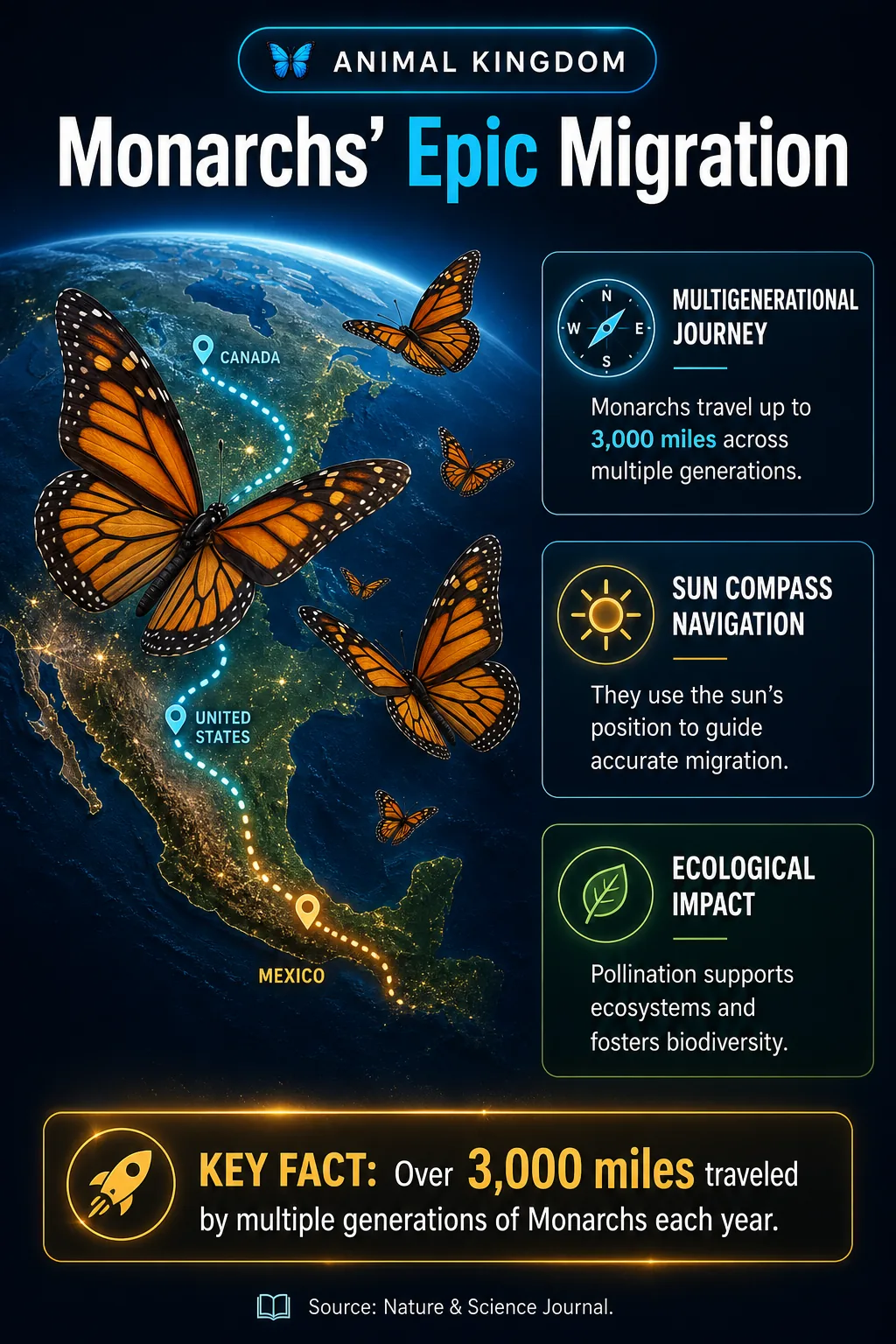
Monarch butterflies travel 3,000 miles on a multigenerational journey to Mexico.
- MULTIGENERATIONAL JOURNEY: Monarch butterflies travel over 3,000 miles from North America to central Mexico, spanning multiple generations.
- SUN COMPASS NAVIGATION: They use a time-compensated sun compass to maintain direction, utilizing the sun's position and time of day.
- ECOLOGICAL IMPACT: This migration fosters biodiversity and aids in pollination across their vast migratory pathway.
Monarch butterflies undertake one of the most astonishing migration journeys in the animal kingdom. Every autumn, these striking orange and black insects make the arduous 3,000-mile journey from North America to the warmer climates of central Mexico. This trek isn't completed by a single butterfly but is a multigenerational feat. In fact, it may take up to four successive generations to complete the full round trip. A key factor enabling this remarkable journey is the Monarch's unique navigation abilities. They utilize a sophisticated "time-compensated sun compass" which allows them to maintain a steady course by using the position of the sun in relation to the time of day. Coupled with geographical cues, this natural compass aids them in traversing such vast distances. However, only Danaus plexippus plexippus, the specific subspecies of Monarch butterflies, displays this migratory behavior. Their migration is a natural marvel that not only captivates scientists but also becomes a vital ecological process, fostering biodiversity and the pollination of plants along their route. Observing these winged travelers reminds us of the intricate and extraordinary strategies life utilizes to survive and thrive across our planet.


Comments
Post a Comment