Axolotls: Salamanders that Retain their Youthful Aquatic Form for Life.
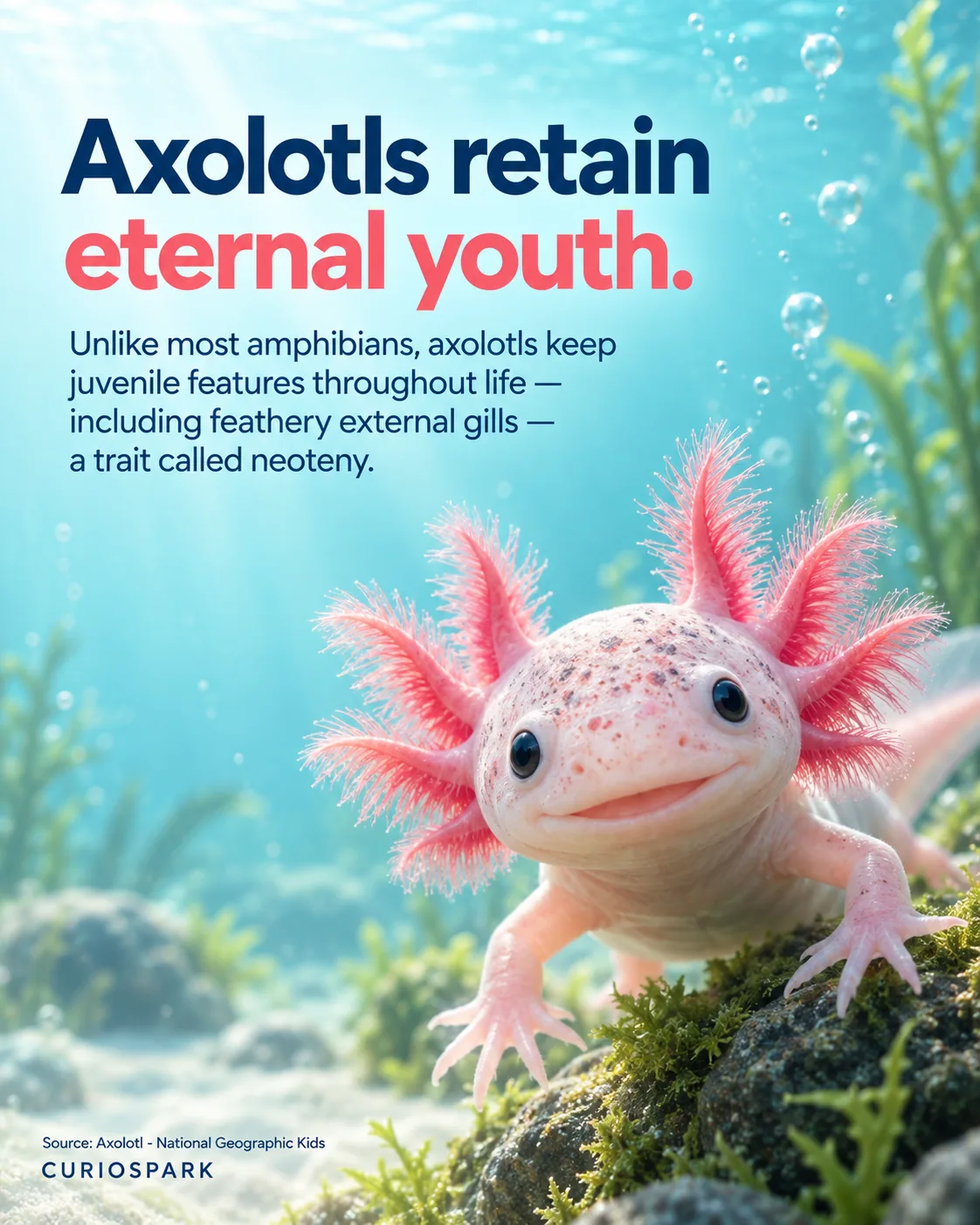
Axolotls: Salamanders that Retain their Youthful Aquatic Form for Life.
- Unlike most salamanders, axolotls' unique neoteny keeps them in the juvenile aquatic stage indefinitely.
**The axolotl**, a distinct form of salamander, is a fascinating species known for its unique characteristic: neoteny. Unlike most salamanders that typically undergo metamorphosis to transition from a larval aquatic stage to a terrestrial adult one, axolotls defy this process. They retain their juvenile features throughout their lifespan. This includes their external gills, which are more commonly seen in the larvae of other amphibians. One of the key reasons for this prolonged juvenile phase is the absence of the **thyroid-stimulating hormone** necessary for the production of thyroxine. Thyroxine plays a vital role in initiating metamorphosis in many amphibians. By lacking this hormonal cue, axolotls remain in their aquatic form indefinitely. Axolotls are naturally found in the unique lake systems near Mexico City, including **Lake Xochimilco**. However, their habitat faces severe threats due to urban encroachment and pollution, making their conservation imperative. This environment is perfectly suited to their aquatic lifestyle, offering ideal conditions for gill-breathing throughout their life. These factors make the axolotl an extraordinary subject of scientific study, shedding light on regenerative medicine and evolutionary biology. Not only do they inspire curiosity due to their unusual development, but they also serve as critical symbols of environmental change and conservation in their native region.**


Comments
Post a Comment