Dark matter's gravitational influence hints at an unseen cosmic presence.
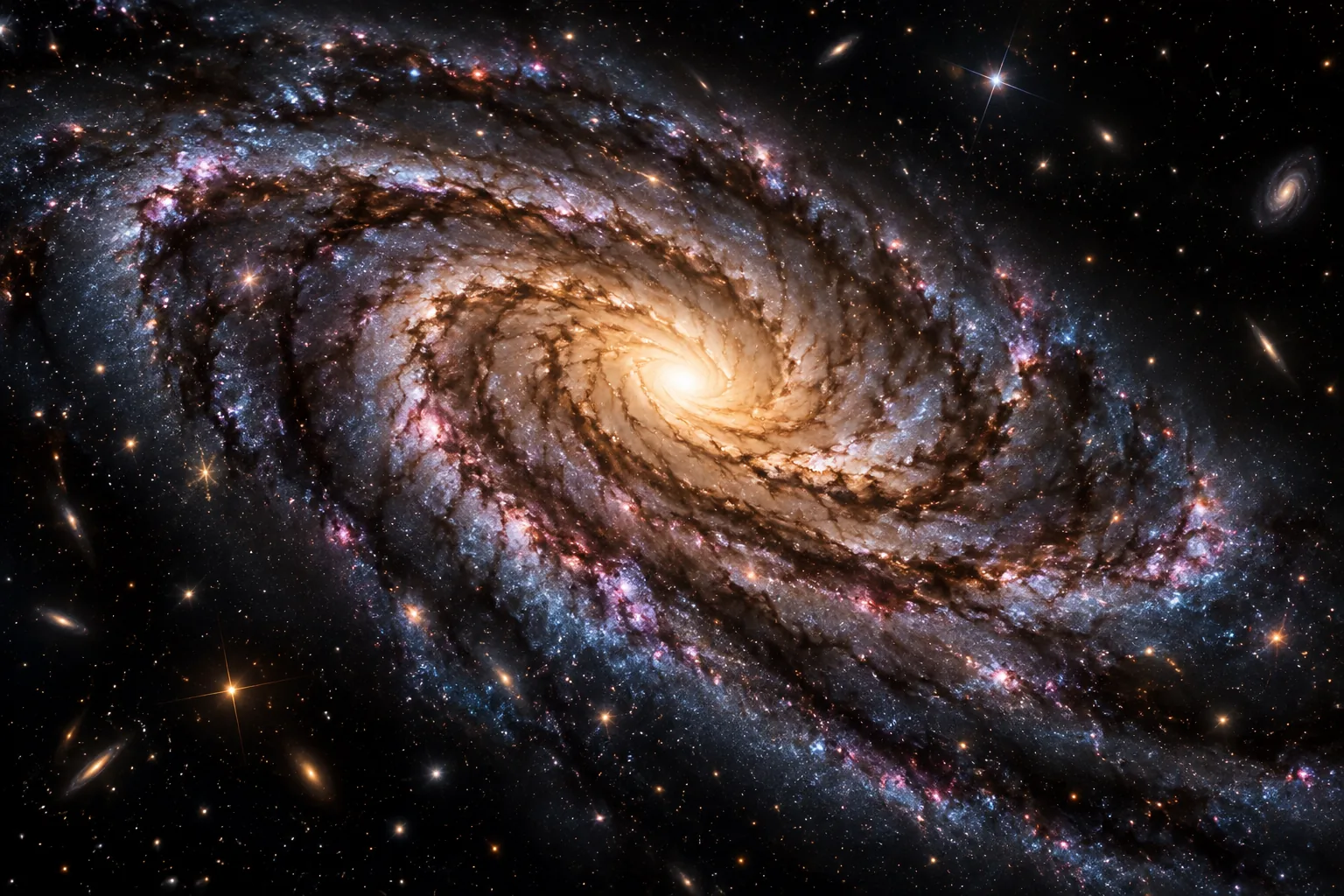
Dark matter remains one of the most intriguing puzzles of modern cosmology. Though it can't be seen directly, its gravitational effects are pivotal to understanding the universe.
Unseen Forces: The Shadow Universe
The universe is held together by unseen forces. Dark matter, a mysterious substance, is not part of the electromagnetic spectrum. This means that it doesn't emit, absorb, or reflect light, making it completely invisible to traditional optical observation methods.
Gravitational Clues: What We Observe
This elusive material is detected indirectly by its gravitational effects on surrounding celestial objects. The movement and rotation of galaxies, for instance, can only be explained by the presence of a massive, unseen substance exerting its gravitational pull.
- Dark matter is invisible and does not interact with electromagnetic forces like visible matter does.
- Its existence is inferred through gravitational effects on galaxies and planetary systems.
Efforts to understand dark matter also delve into its relationship with dark energy, another enigmatic component of the universe. Together, they form a complex picture that challenges our conceptions of the cosmos, shaping the foundational theories of Big Bang cosmology. As our tools and experimental capabilities evolve, scientists remain on the hunt to unravel these cosmic mysteries.


Comments
Post a Comment