Frigatebirds can sleep mid-flight using unihemispheric slow-wave sleep.
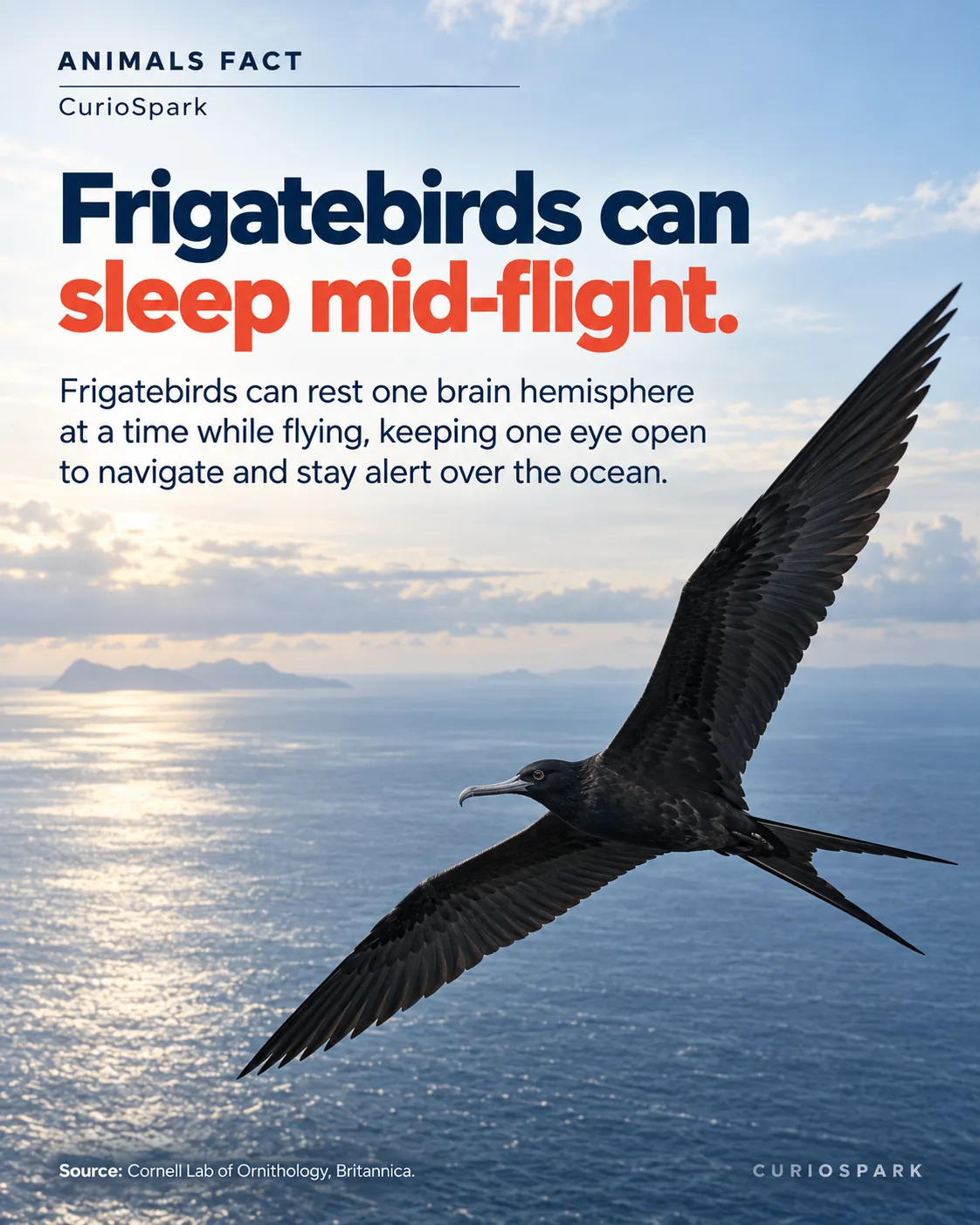
Frigatebirds can sleep mid-flight using unihemispheric slow-wave sleep.
- Some birds, like frigatebirds, use unihemispheric slow-wave sleep to rest while flying long migratory distances.
Some birds, like the frigatebird, have evolved the incredible ability to sleep while remaining airborne, crucial for surviving extensive migratory journeys. This remarkable feat is made possible through unihemispheric slow-wave sleep (USWS), a specialized sleep pattern where only one hemisphere of the brain rests at a time. The other hemisphere remains alert, allowing the bird to maintain the necessary control over its wings and navigate effectively while flying.\n\nThe frigatebird, known for its extraordinary endurance, can fly for weeks non-stop across vast stretches of the ocean. During these prolonged flights, staying awake the whole time is not feasible; thus, USWS enables these birds to periodically rest without compromising flight abilities. Their adaptation ensures they continue gliding along their path, conserving energy by not losing altitude or veering off course.\n\nThis evolutionary adaptation is not only fascinating but crucial for certain bird species' survival, as it allows them to traverse long migratory routes without needing to land frequently. With one eye open and one part of the brain awake, they vigilantly maintain their journey, securing both rest and the ability to respond to any potential threats.


Comments
Post a Comment