Octopuses masterfully change color and texture to blend in using specialized cells.
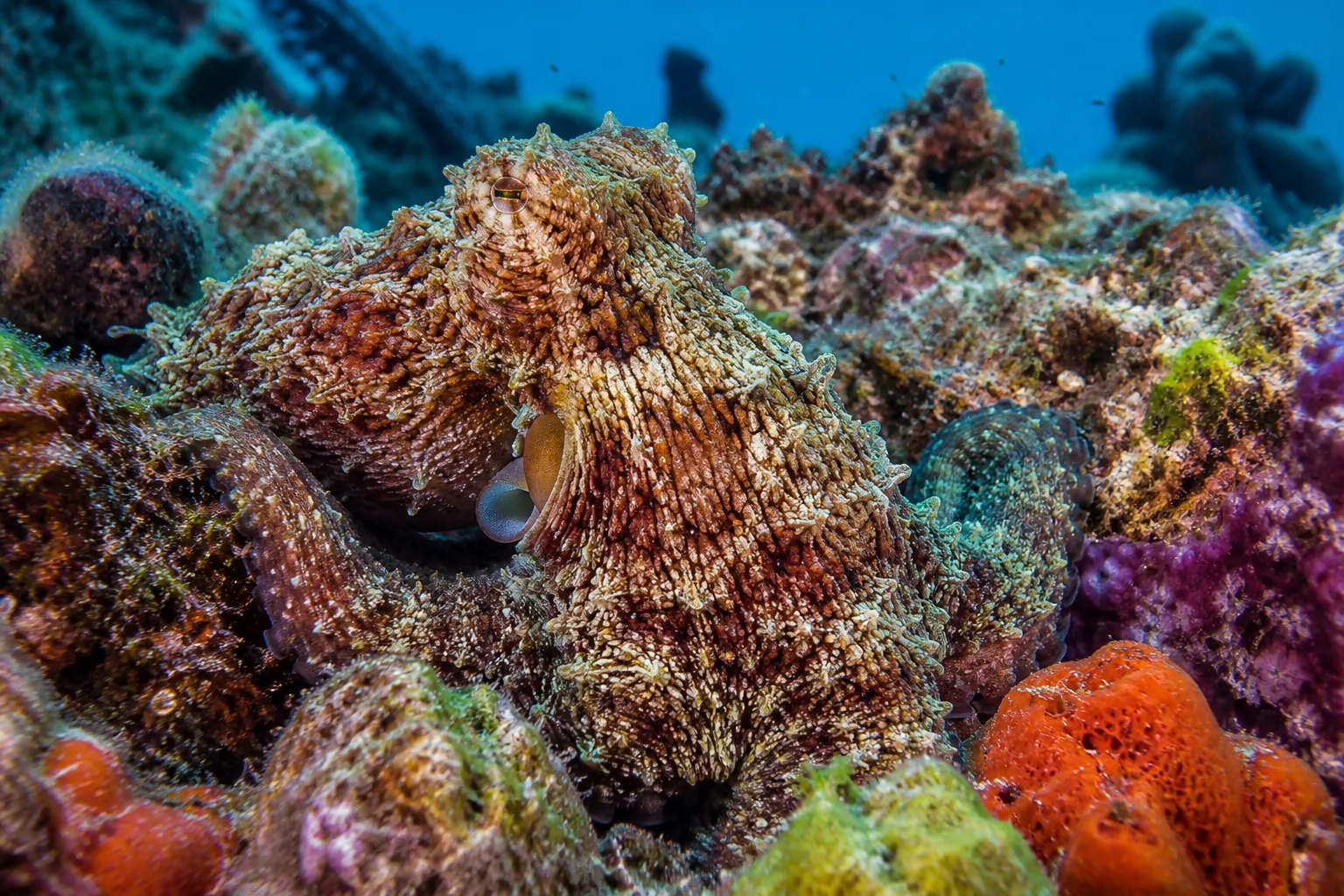
The octopus is a marvel of the ocean, known for its astonishing ability to seamlessly disguise itself against the backdrop of its underwater surroundings. This remarkable camouflage is made possible through specialized skin cells called chromatophores, which expand or contract to show different colors. These cells contain pigments that can quickly change the hue and opacity of the octopus's skin, allowing it to transition from one color to another in the blink of an eye. Even more impressively, chromatophores can independently sense changes in light, enabling the octopus to adapt to its environment without relying solely on its vision. Aside from color changes, octopuses also manipulate their skin texture. By controlling muscles under the skin, they can make it appear more rugged or smooth, mimicking the textures of marine debris, rocks, or coral formations. This dual color and texture adaptation not only helps them avoid predators but also aids in communication with other octopuses. Cephalopods such as octopuses and their close relatives, the cuttlefish, use these abilities not just to hide but also to communicate their moods or intentions among their kind. This intricate system is a testament to the ingenuity of nature, showcasing how biophysics and behavior intertwine to provide the octopus with advantages that are critical for its survival and success in the ocean realm.


Comments
Post a Comment